
You have found a property that looks promising. The neighbourhood is right, the lot seems large enough, and you can already picture the house. Before making an unconditional offer, a conversation with experienced custom home builders Calgary homeowners trust can reveal whether the site can actually support the home you have in mind.
That early conversation matters because land and house design cannot be separated. Setbacks, slope, access, trees, utilities, sunlight, and soil conditions all influence what can be built and what it may cost.
So, should you buy the lot first or choose your builder first? There is no single rule for every project, but the lowest-risk approach is to involve a builder before the purchase becomes firm. You can still lead the property search; the builder simply helps you test the opportunity before you commit.
A Good Location Is Not Enough
Most people begin with location, and that makes sense. Commute, schools, nearby amenities, street character, and long-term value all matter. A property can check every one of those boxes and still be a poor fit for the house you want to build.
A wide-looking lot may lose usable space to setbacks or an easement. A beautiful slope may require more excavation, retaining work, or a different foundation. A mature tree can be an asset, but its location and root zone may shape the building footprint and site access.
The important question is not simply, “Do we like this lot?” It is, “Can this lot support our priorities without forcing compromises we will regret?”

Why Buying the Lot First Feels Like the Natural Order
When the right property appears, acting quickly can feel necessary. Buyers may worry that waiting for a builder or designer will mean losing the opportunity. Owning the land also makes the project feel real and gives the design team a specific site to work from.
Buying first can work well when the property is straightforward and the homeowner understands the conditions attached to it. The risk comes from treating a quick visual impression as a complete site review.
If the offer includes a reasonable due-diligence period, use it. A short review of the survey, title, planning constraints, servicing, and site conditions can be far less costly than discovering a major limitation after closing.
What to Check Before You Buy a Custom-Home Lot
A useful lot review looks at the whole property, not just the space where the house might sit. The goal is to understand how the home, garage, driveway, grading, landscaping, and outdoor areas will work together.
Before removing conditions from an offer, investigate:
- Lot dimensions and the legal property boundaries
- Required setbacks, easements, and the practical buildable area
- Slope, drainage, retaining needs, and likely excavation
- Available information about soil and below-ground conditions
- Existing trees and any protection requirements
- Sun exposure, views, privacy, and neighbouring homes
- Garage position, driveway slope, and winter access
- Utility locations, capacity, and service connections
- The amount and usability of the remaining backyard
- Space for equipment, deliveries, and construction access
Not every item will be fully resolved before purchase. What matters is identifying the assumptions that could change the design, schedule, or budget, then deciding whether the remaining uncertainty is acceptable.
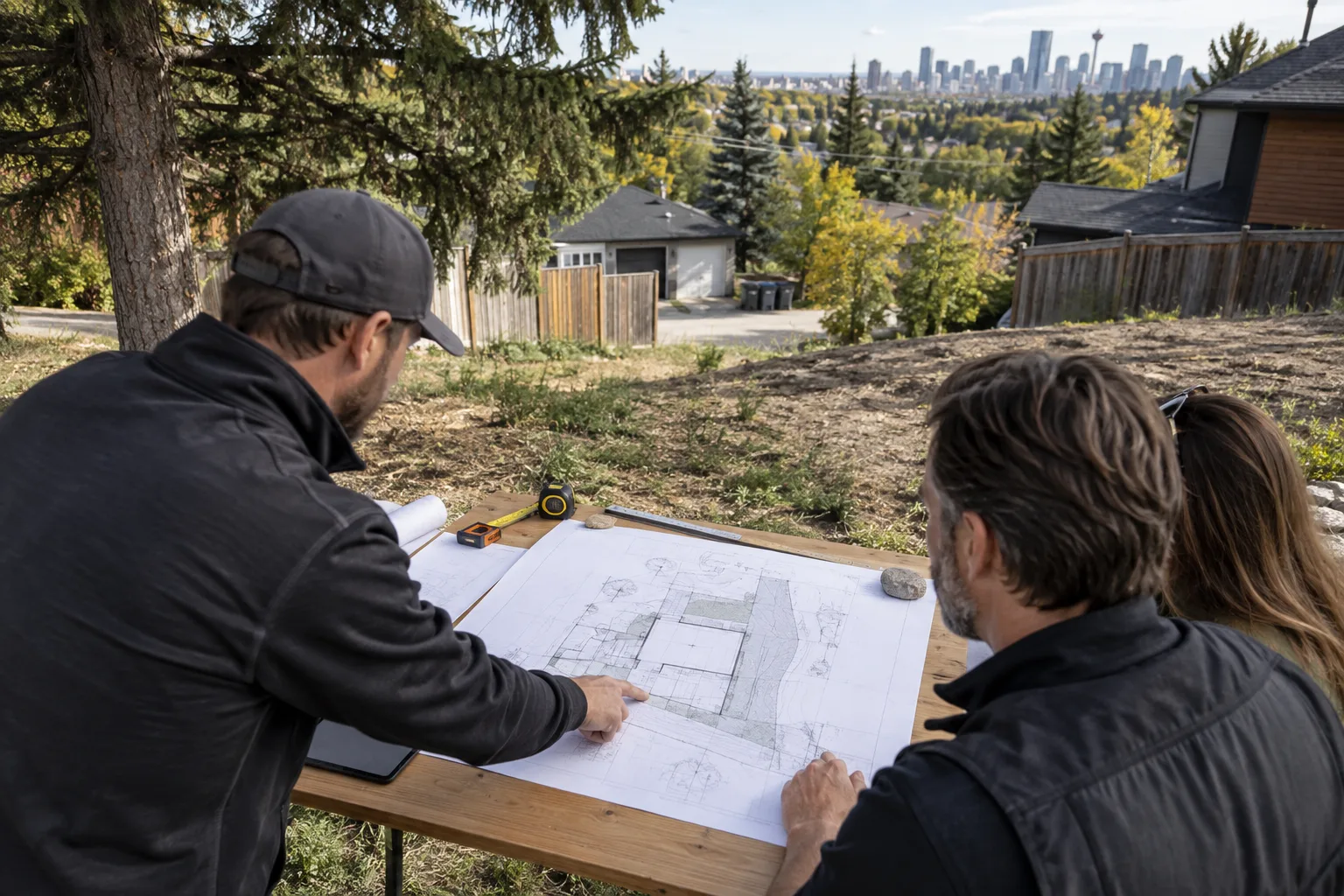
If There Is Already a House on the Property
Some of Calgary’s best custom-home opportunities begin with an older house already on the lot. In that situation, the first decision may be whether to renovate, add on, or rebuild.
The answer depends on more than the age of the home. A review should consider the foundation, structure, building envelope, ceiling heights, mechanical systems, and how well the existing layout can support the new brief.
Demolition also brings its own cost and coordination. Utility disconnections, hazardous-material testing, permits, waste removal, tree protection, and neighbouring properties need to be considered. Those costs belong in the property decision, not as an afterthought once design begins.
When It Makes Sense to Choose a Builder First
Choosing a builder first does not mean handing over the property search. It means having someone available to assess promising lots through the lens of design, construction, and total project cost.
A builder can help establish a realistic brief before the search gets serious: approximate size, number of storeys, garage needs, outdoor priorities, accessibility, and the level of finish. With those priorities clear, each property can be judged against the same standard.
For a specific lot, the builder may also coordinate early input from a designer, surveyor, engineer, arborist, or other specialist when needed. That is more useful than a vague yes-or-no opinion because it identifies what still needs to be confirmed.
The aim is not to design the entire home during a short purchasing window. It is to catch a mismatch between the property and the project before it becomes your problem.
What If You Already Own the Lot?
Owning the property removes the pressure of a purchase deadline, but the same site questions still apply. Begin with the land rather than forcing a preferred floor plan onto it.
A good early study can test several ways to place the house, garage, entrances, and outdoor areas. Comparing those options may uncover a better view, more natural light, a gentler driveway, or a simpler grading strategy.
This is also the time to decide which site features are worth protecting. A mature tree, a quiet corner of the yard, or a particular view may influence the house more than an idea carried over from a different property.
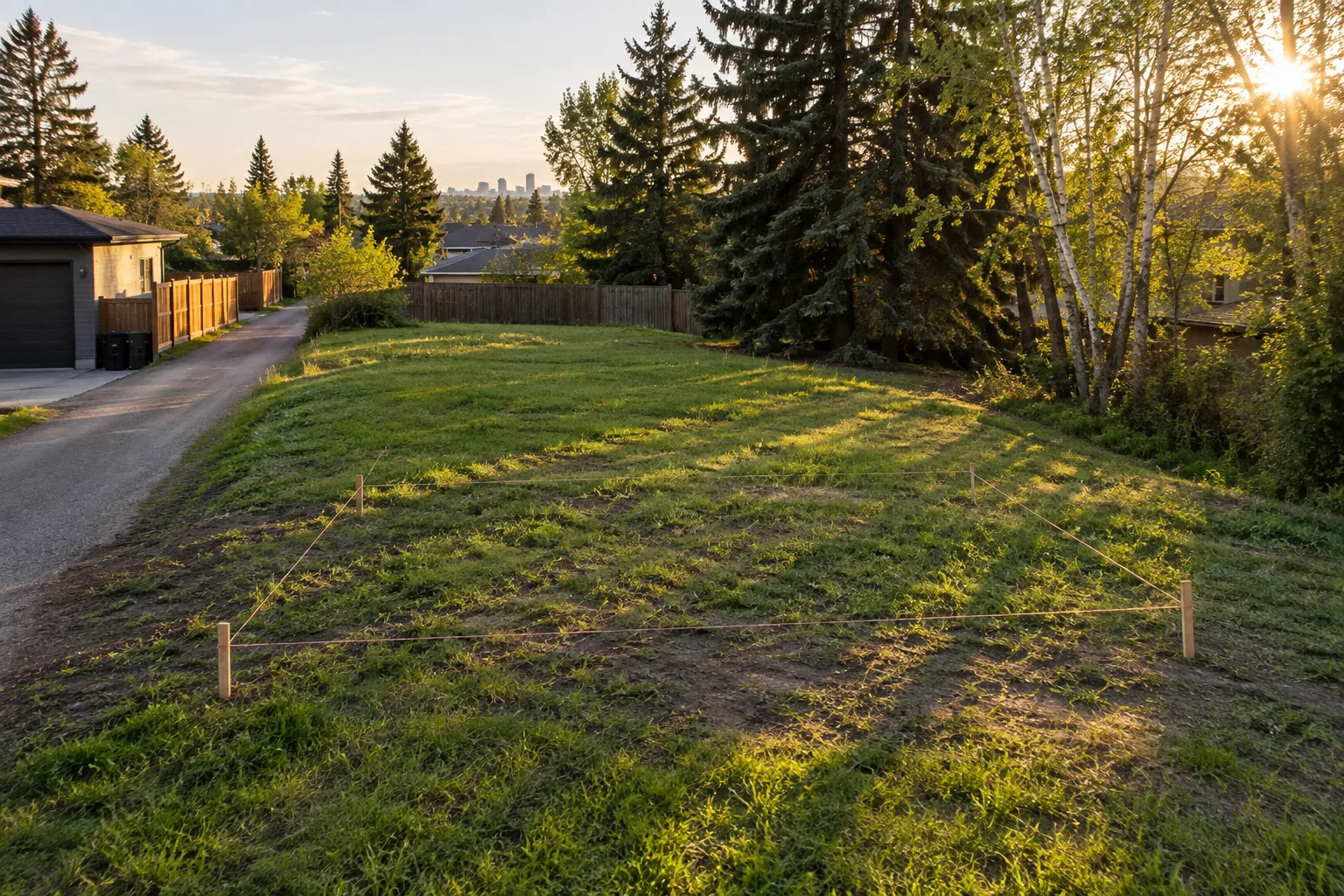
Avoid Designing the Whole House Before You Have the Site
Collecting ideas before buying land is helpful. Completing a detailed house design for an unknown property is usually not.
A plan created without a site may be too wide for the eventual building area, place the garage on the wrong side, miss the best light, or create costly grading. Reworking a detailed design can take more time than developing the right concept after the lot is known.
Focus first on the brief: how you live, which rooms matter most, preferred relationships between spaces, approximate size, architectural character, and budget. Let the final property shape the detailed design.
The Cheapest Lot May Not Produce the Lowest-Cost Project
Purchase price is only one part of the land decision. A less expensive property can require added spending on demolition, excavation, retaining walls, utility upgrades, unusual foundations, drainage, or difficult construction access.
A more expensive lot with straightforward conditions may deliver a better overall result and a more predictable build. Compare properties using an early project budget that includes land, design, permits, site work, construction, landscaping, financing, and contingency.
This comparison will not provide a fixed construction price before design is complete. It will, however, show whether an apparent bargain carries major costs that another property does not.
The Best Lot Is the One That Fits Your Priorities
There is no perfect lot. A larger yard may mean a longer commute. A view lot may bring steeper grading. A mature inner-city property may have tighter access and more neighbouring conditions to manage.
Decide which trade-offs you will accept before the search becomes emotional. Rank the factors that matter most—location, home size, privacy, sunlight, accessibility, garage space, yard, views, timing, and total budget—and use that list to compare opportunities.
A property is a good choice when its strengths support the way you want to live and its constraints are understood, manageable, and reflected in the budget.
Ten Questions to Ask Before Making the Offer Firm
These questions create a practical starting point for a builder and the professionals involved in early due diligence:
- What is the realistic buildable area after setbacks and easements?
- Can the lot support the approximate home and garage we want?
- How might the slope affect excavation, foundations, and drainage?
- Are there known soil, utility, or servicing concerns?
- Which trees or site features could affect the plan or construction access?
- Where will the driveway work best, especially in winter?
- How will neighbouring homes affect privacy, windows, and outdoor space?
- If a house exists, is renovation worth comparing with demolition and rebuilding?
- Which assumptions could materially change the budget?
- What needs to be confirmed before conditions are removed?
Build the Home and the Property Together
The strongest custom homes are not designed in isolation and then placed on a convenient patch of land. The house and property are planned as one project from the beginning.
If you find a promising lot first, bring a builder into the conversation before the purchase becomes unconditional. If you choose a builder first, use that early relationship to define the brief and assess properties with more confidence.
Either route can work. What matters is making the decision with a clear view of the site, the home you want, and the full cost of bringing the two together.
Frequently Asked Questions
Should I buy a lot before choosing a custom-home builder?
You can find the lot first, but it is wise to involve a builder before the offer becomes unconditional. An early review can identify constraints that affect the design, construction approach, schedule, or budget.
Can a builder tell me exactly what a home will cost before I buy the lot?
Not usually. A reliable fixed price requires design and detailed project information. A builder can still prepare an early feasibility range and flag site conditions that may add significant cost.
What information is most useful for an early lot review?
The property address, real-estate listing, title information, survey or real property report, available utility details, and a simple description of the home and garage you want are useful starting points.
Is a sloped lot unsuitable for a custom home?
No. A slope can create opportunities for views, walkout spaces, and a distinctive design. It may also add excavation, structural, drainage, or retaining requirements, so those implications should be assessed early.
Should I renovate or rebuild an existing house on the lot?
Compare the condition and layout of the existing home with your project brief. If achieving the desired result requires extensive structural changes while preserving little of value, rebuilding may deserve consideration alongside renovation.